
Oily skin simply means your skin is producing more oil than it actually needs. This is why your face looks shiny and why pores clog easily, which leads to pimples and breakouts — especially in hot or humid weather. Many people try to fix this by washing their face again and again or using very strong products, but that usually does the opposite and makes the problem worse.
This article shares a practical skin care routine for oily skin naturally at home. It focuses on simple daily habits, safe home remedies, and a few ingredients that help reduce excess oil, keep pores clear, and prevent irritation instead of causing it.
What causes oily skin?
Oily skin happens mainly because your skin produces more oil than it needs. This extra oil can block pores and cause shine, pimples, and breakouts. A few common reasons behind this are:
Overactive sebaceous glands:
These are the oil-producing glands in your skin. In some people, they naturally work harder and produce more oil than necessary.
Hormonal changes:
Hormones like androgens can increase oil production. This is why oily skin is common during teenage years, periods, pregnancy, or times of stress.
Hot or humid weather:
Heat and humidity make your skin sweat more and trigger oil glands to produce extra oil, making your face look greasy.
Using the wrong skincare products:
Harsh cleansers, strong scrubs, or alcohol-based products can dry out your skin. When this happens, your skin reacts by making even more oil to protect itself.
Is your skin oily or dehydrated?
Oily skin is not the same for everyone. Some people naturally produce a lot of oil. Others have skin that is actually dry underneath but looks oily on top. This difference matters because the routine is not the same for both.
Signs of oily skin:
Your face stays shiny most of the day, mainly on the forehead, nose, and chin. Pores look bigger, makeup doesn’t last long, and blackheads or pimples show up easily.
Signs of dehydrated oily skin:
Your skin feels tight or uncomfortable after washing but still becomes shiny later. You might notice dry patches, light flaking, or a rough feeling along with oil. This usually means your skin needs water, not more oil control.
Why the routine is different:
True oily skin needs gentle cleansing and oil control. Dehydrated oily skin needs hydration first, then oil control. Treating dehydrated skin like oily skin usually makes irritation and oiliness worse, not better.
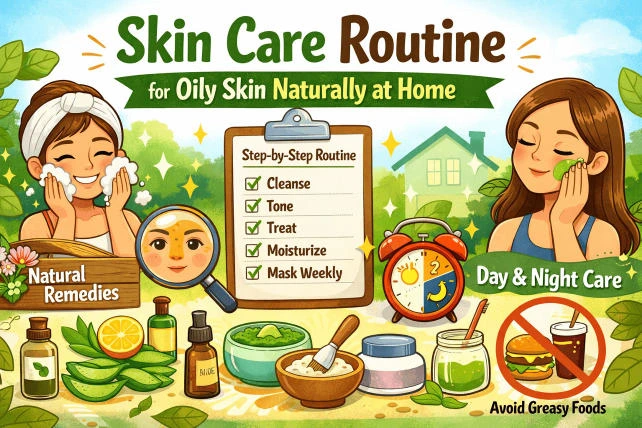
Daily skin care routine for oily skin naturally at home
You don’t need a complicated 10-step routine. For oily skin, simple and consistent works better than doing too much.
Morning routine
1. Cleanser
Wash your face with a gentle, non-foaming or mild foaming cleanser to remove oil and sweat from the night.
2. Toner (optional)
Use a mild, alcohol-free toner only if your skin feels very oily or if you like how it feels. This step is not mandatory.
3. Serum (optional)
If you use a serum, keep it light. Niacinamide is a good option for oily skin because it helps control oil and reduce pores.
4. Moisturizer
Yes, oily skin still needs moisturizer. Use a light, gel-based or water-based one so your skin stays balanced and doesn’t overproduce oil.
5. Sunscreen
Always finish with sunscreen in the morning. Choose a non-greasy, matte or gel sunscreen so it doesn’t feel heavy.
Night routine
1. Cleanser
Wash your face to remove dirt, oil, sunscreen, and pollution from the day.
2. Toner (optional)
Use only if your skin feels very oily or congested. Skip if your skin feels dry or tight.
3. Treatment/serum
At night you can use actives like salicylic acid (2–3 times a week) for acne or azelaic acid for marks. Don’t use strong actives every night.
4. Moisturizer or night cream
Use a light moisturizer at night as well. Heavy creams are not needed for oily skin.
5. Eye cream (optional)
Only if you have dryness or fine lines around the eyes. Otherwise, you can skip this step.
Safety
Patch test before use
Stop if irritation happens
Do not use lemon, baking soda, or toothpaste
DIY natural remedies for oily skin at home
These home remedies can help control oil, calm the skin, and reduce breakouts when used the right way. Do not overuse them – more is not better.
Aloe vera + green tea gel
Ingredients:
2 teaspoons of fresh aloe vera gel
1 teaspoon of cooled green tea
How to use:
Mix both, apply thin layer on clean skin, leave 15–20 minutes, rinse.
Use 3–4 times a week.
Multani mitti + rose water mask
Ingredients:
1 tablespoon multani mitti
Enough rose water to make a paste
How to use:
Apply for 10–12 minutes, rinse before it fully dries.
Use once a week.
Oatmeal + yogurt gentle cleanser
Ingredients:
1 tablespoon finely ground oatmeal
1 teaspoon plain yogurt
How to use:
Massage gently on wet skin for 30 seconds, rinse.
Use 1–2 times a week.
Honey + neem spot treatment
Ingredients:
1 teaspoon honey
2–3 drops neem oil
How to use:
Apply only on pimples, leave for 15 minutes, rinse.
Use as needed.
Important safety tips
Always patch test before using any new remedy.
Do not use lemon, baking soda, or toothpaste on your face — they damage the skin barrier.
If your skin burns, stings, or turns red, stop using the remedy.
Honest reminder
Home remedies help with mild oil and breakouts. If you have painful acne, cysts, or dark scars, DIY alone will not fix it – you’ll need proper treatment.
Best natural ingredients for oily skin
These ingredients are gentle, easy to find, and actually helpful for oily and acne-prone skin when used the right way.
Aloe vera
Aloe vera hydrates the skin without making it oily. It also helps calm redness and irritation and supports healing.
Green tea
Green tea contains antioxidants that help reduce oil production and calm inflamed skin. It is also helpful for acne-prone skin.
Rose water
Rose water refreshes the skin, lightly cleanses pores, and helps maintain the skin’s natural balance without drying it.
Oatmeal
Oatmeal soothes sensitive skin, removes dead skin gently, and reduces redness or itching.
Neem
Neem has natural antibacterial properties and helps control acne and breakouts. It is best used in small amounts or as a spot treatment.
Simple reminder
Natural ingredients help support healthy skin, but they are not instant cures. Use them gently and consistently for best results.
Active ingredients for oily skin (safe to use at home)
These ingredients are commonly used in skincare products and are proven to help with oil control, acne, and clogged pores when used properly.
Niacinamide
Helps reduce oil, tighten the look of pores, and strengthen the skin barrier. It is gentle and suitable for daily use.
How to use: 5–10% serum, morning or night.
Salicylic acid
Cleans inside the pores and helps treat acne, blackheads, and whiteheads.
How to use: 1–2% serum or cleanser, 2–3 times a week at night.
Hyaluronic acid
Hydrates the skin without adding oil. Very useful for oily but dehydrated skin.
How to use: Daily, before moisturizer.
Azelaic acid
Helps reduce acne, redness, and acne marks.
How to use: At night, 2–3 times a week.
Clay (kaolin or bentonite)
Absorbs extra oil and helps clean pores.
How to use: As a mask, once a week.
Safety tips
Do not use many active ingredients at the same time.
Introduce one new ingredient at a time.
If your skin burns or stings, stop using it.
Active ingredients - what not to mix
Some ingredients should not be used together because they can irritate the skin or damage the skin barrier.