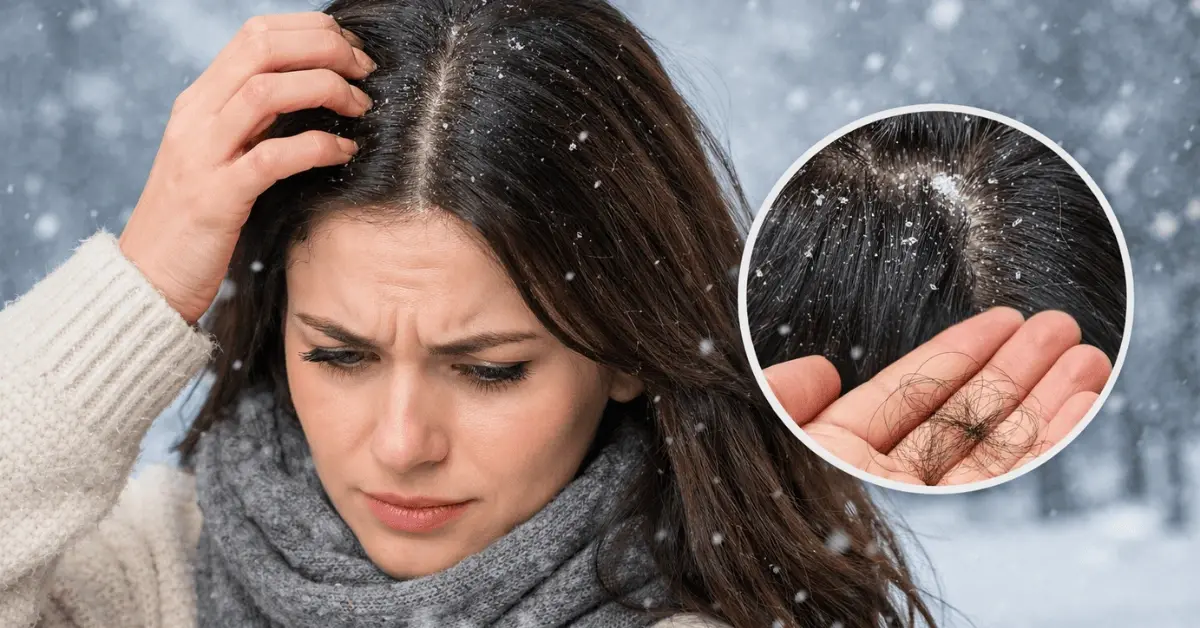

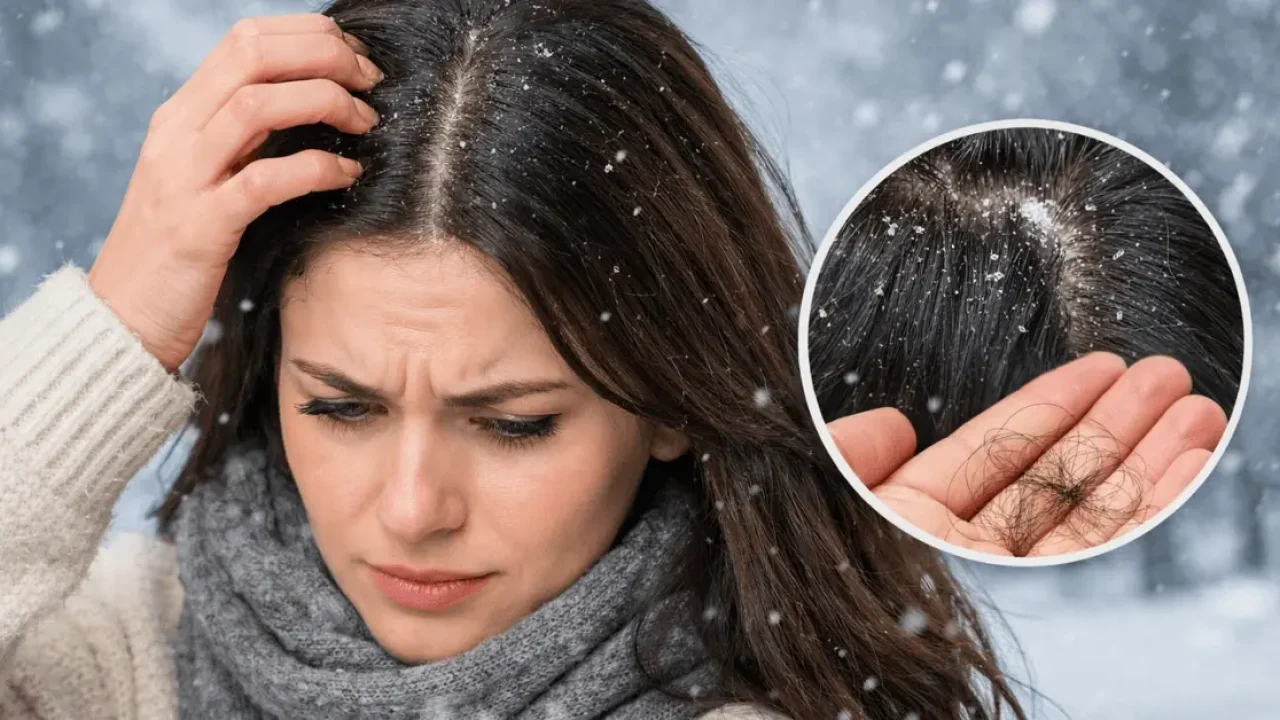
How to avoid dandruff in winter is a question many people start asking as soon as the cold weather sets in. The scalp feels drier than usual, itching increases, white flakes start showing up on clothes, and hair fall suddenly feels worse. Many people assume this is only a dry skin issue, similar to other seasonal skin problems, but in reality, winter often triggers dandruff flare-ups. If left unchecked, this can gradually lead to noticeable hair fall. This article breaks down why that happens, what actually helps, and which popular fixes are simply myths.
Why Dandruff Gets Worse in Winter
In winter, the scalp loses moisture much faster than it does in other seasons. Cold outdoor air and dry indoor heating both reduce humidity, leaving the scalp dry, tight, and itchy. This dryness weakens the scalp’s natural protective barrier, making dandruff more likely to appear.
To deal with this dryness, the scalp often starts producing extra oil. Instead of fixing the issue, this imbalance causes dead skin cells to build up, which show up as visible white flakes. Cold weather can also make the scalp more sensitive, so itching and irritation feel stronger than usual.
Another winter habit that worsens dandruff is washing hair with very hot water. Hot water strips away natural oils from the scalp, increasing dryness and triggering even more flaking. When dry air, excess oil production, scalp sensitivity, and harsh washing habits combine, dandruff becomes much harder to control during winter.
Can Dandruff Cause Hair Loss?
Yes, dandruff can indirectly cause hair loss. When dandruff causes persistent itching, people tend to scratch their scalp repeatedly. This damages the scalp’s protective barrier, weakens the hair follicles, and increases hair fall, especially if the dandruff problem is severe.
This risk is further amplified during the winter months. Cold weather and low humidity dry out the scalp, reduce the production of natural oils, and worsen dandruff, which is why many people notice increased hair fall during this season. However, dandruff does not usually cause permanent hair loss. Once the dandruff is treated and the scalp inflammation subsides, hair fall often decreases, and normal hair growth resumes.
In summary, untreated dandruff can lead to hair loss, but prompt management, especially during winter, helps protect the hair follicles and prevent unnecessary hair fall.
How to Control and Prevent Dandruff in Winter
1. How to Prevent Dandruff During Winter
Preventing dandruff during the colder months starts with taking proper care of your scalp before flaking begins. As temperatures drop, the scalp loses moisture faster than usual, which often leads to dryness, itching, and visible flakes. This is when understanding how to prevent dandruff during winter becomes important, especially if you want to avoid recurring irritation and embarrassment from flakes on clothing. Using a gentle anti-dandruff shampoo two to three times a week helps keep the scalp clean without stripping away its natural oils. Washing hair too frequently, however, can dry out the scalp and make dandruff worse.
Light oiling can help maintain scalp balance, but many people wonder whether oil actually increases dandruff. The answer depends on how it’s used. A small amount of oil applied before washing may help reduce dryness, while excessive or frequent oiling can lead to buildup and increased flaking. Simple habits like staying hydrated, avoiding harsh scrubbing, and following a consistent routine can make a noticeable difference over time.
2. How to Control Dandruff in Winter
If dandruff is already present, knowing how to control dandruff in winter becomes important to reduce flakes and irritation without damaging the scalp. Use a targeted anti-dandruff shampoo regularly and give it enough time to work before rinsing. Switching products too often can actually make dandruff worse instead of improving it.
Avoid scratching the scalp, even if itching feels intense, as this can irritate the skin and increase flaking. After washing, dry hair gently and avoid rubbing the scalp with a towel, which can worsen irritation during winter.
Consistency is key when dealing with seasonal dandruff. Following the same scalp-care routine for a few weeks allows dandruff to settle instead of flaring up repeatedly throughout winter.
Choose a Mild Anti-Dandruff Shampoo for Dry Scalp
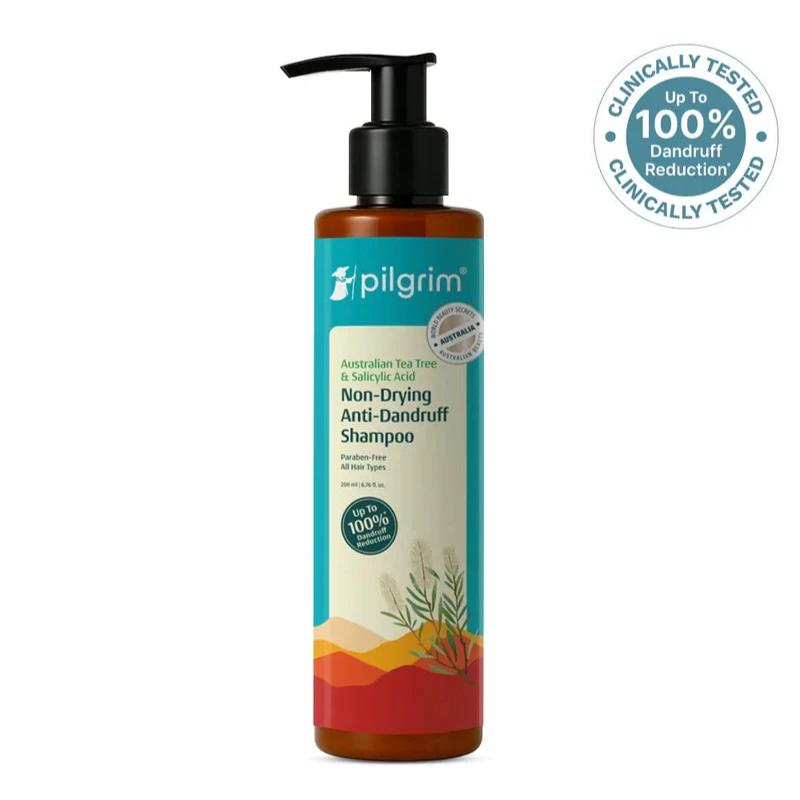
Product Description
- Helps control mild dandruff and visible flakes
- Suitable for all hair types (men & women)